Whispers of Cyrodiil in Blocks: A Pilgrim’s Chronicle of Minecraft’s Oblivion Remake
Minecraft Oblivion map by Miksu23 recreates Cyrodiil's golden fields with pixel-perfect nostalgia and immersive, downloadable artistry.
I still remember the shiver that traced my spine when I first stumbled upon Miksu23’s creation—a realm where the golden fields of Cyrodiil had been translated not into shimmering HD textures, but into the humble, pixel-perfect geometry of Minecraft. It was 2026, and the internet had become a vast graveyard of sensational builds, yet this one felt different. Each stone seemed to hold an echo of a quest, every rooftop a half-remembered dialogue. I had walked those cities in 2006, and now I was walking them again, rebuilt not by Bethesda’s sorcery, but by the patient hands of a single dreamer. The world of Oblivion, once confined to a disc, had been reborn in blocks.
What struck me first was not the scale, but the intimacy. Miksu23 had done more than just copy floorplans; they had bottled the particular melancholy of Cheydinhal’s canals, the proud symmetry of the Imperial City’s white-gold tower, the rustic warmth of Chorrol’s hearth fires. On Reddit, a user called DarkAligator61 confessed, “I squealed when I saw Cheydinhal,” and I understood completely. That visceral reaction—a blend of nostalgia and pure awe—was the soul of this project. Another commenter, MagmaticPenguin, whispered a hope that Pelinal Whitestrake might stride around the next corner, and in that moment, the lines between the game and the remake dissolved. The build was not just a monument; it was a stage waiting for its actors.
✨ The Gift of Tangibility
The rarest treasure in these virtual archaeology digs is the download link. So many vast creations remain locked behind YouTube flyovers, forever out of reach. Miksu23, however, offered the entire world as a downloadable map. I remember the words of a user named PSPDude: “Renders only go so far. With large scale builds, sometimes you just get a better feel for it walking around.” And walk I did. For hours, I drifted through the cobblestone simulacra, my own footsteps replacing the absent NPCs. There was Cloud Ruler Temple, perched on its ledge like a stone hawk; there were the bridges of the Waterfront, still aching with the memory of thieves. Walking that world felt like reading a love letter written in a language of torches and redstone.
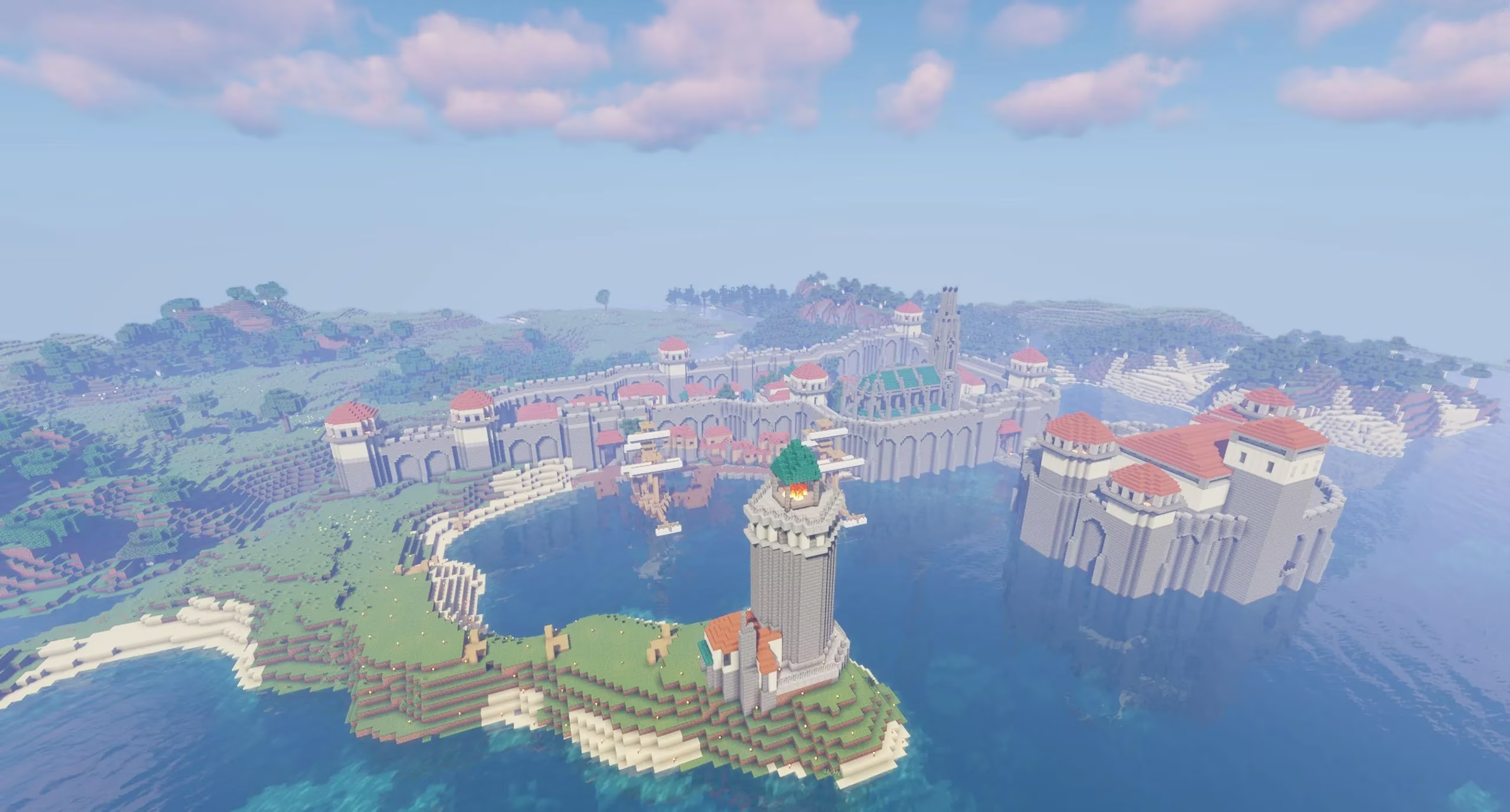
The city unfolded like a diorama from a faded dream. Oak-wood roofs replaced by spruce planks, the chapels where I once prayed to the Nine Divines now standing as massive stone husks. Yet the geometry of nostalgia held true. Every turn evoked a memory—the fighter’s guild, the mage’s tower—each rendered with a deliberate simplicity that somehow enhanced the magic. In a medium often derided for its blocky aesthetics, this was high art, a cathedral of constraint.
🌒 Shadows of Skyblivion
This Minecraft marvel exists in a wider tapestry of oblivion-born longing. For nearly a decade now, a team of modders has been weaving Skyblivion, a project that transplants the entire province into the engine of Skyrim. Their journey has been a saga in itself—a long march through countless life demands. One developer, speaking in a rare update, confessed they were “closer to the end than the beginning,” yet refused to give a date. Real life, with its vacations and overwork, continues to be the final boss. In 2026, the mod is still eagerly awaited, a phantom on the horizon. But where Skyblivion seeks to modernize, Miksu23’s Minecraft tribute chooses to distill. One smooths the edges with high-resolution textures and dynamic lighting; the other speaks in the primal tongue of 16×16 pixels, and in that roughness, we find a different kind of truth.
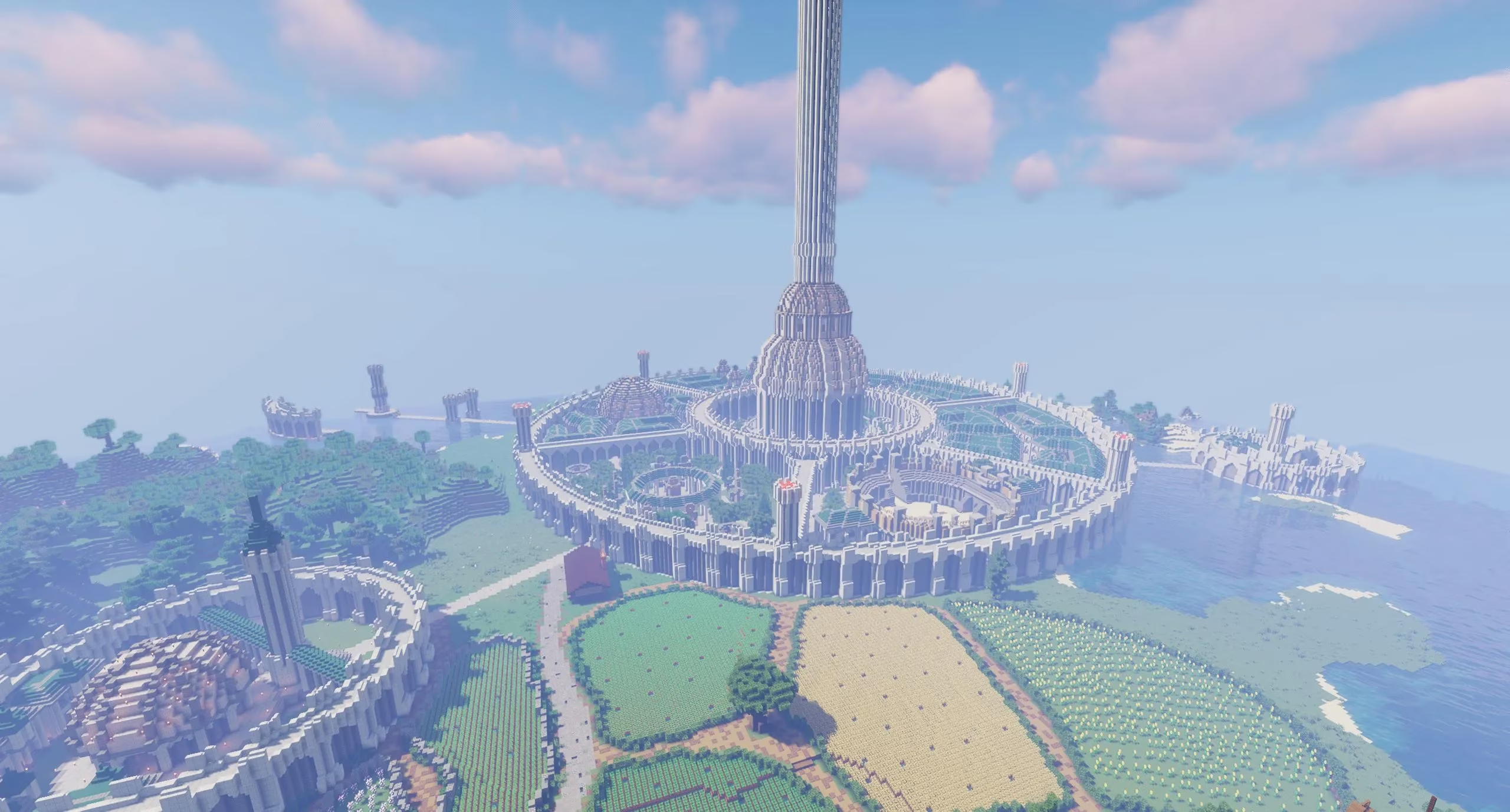
Peering at the battlements, draped in Minecraft’s eternal twilight, I felt the same wanderlust that once drove me to close every Oblivion gate. The greenery—so carefully placed—seemed to breathe. Miksu23 had even included extra structures, little surprises tucked into the landscape like love notes in an old book. The build wasn’t just a replica; it was a conversation between two era-defining games.
🌍 A Tradition of World-Building
This kind of devotion is not unique. The Minecraft community has long been a sanctuary for those who want to hold their favorite worlds in their hands. I recalled the monumental effort by a player named DawnArchi, who once rebuilt the entire continent of Teyvat from Genshin Impact. That map, a mosaic of recognizable settings, was a testament to obsession—each structure reportedly demanded “more than ten days of work.” I remember running through DawnArchi’s Liyue Harbor, my mind struggling to reconcile the familiar sloped roofs with the alien cubes of Minecraft. It was the same shock of recognition I felt in Miksu23’s Cyrodiil: a proof that the spirit of a place can survive any translation.
These builders are cartographers of the immaterial, stitching together geographies that exist only in memory and code. Their work reminds us that the landscapes we love—be they the grassy knolls of Teyvat, the ash-blighted slopes of Vvardenfell, or the sun-dappled forests of Cyrodiil—are ultimately constructs of emotion. To rebuild them in another medium is an act of preservation, a shout into the digital void that declares, “This mattered.”
🎭 The Pilgrim’s End
As I finally closed my Minecraft session, the sun setting over the pixelated Imperial City, I realized that Miksu23’s creation was more than a technical feat. It was a pilgrimage site. Each block had been placed by someone who, like me, had once been a prisoner in a forgotten cell, dreaming of a grand adventure. And now, in 2026, that dream had been handed back to us, not as a flawless emerald, but as a rough-hewn diamond—beautiful precisely because of its imperfections. I logged off with a quiet smile, knowing that somewhere out there, another Pelinal whispered in the dark, and another Cheydinhal awaited its squeal of recognition.