A Genshin Player’s Five-Year Journey Through Fortunes and Fury
Genshin Impact's staggering $2 billion first-year revenue masked its fiery 2021 anniversary backlash, when stingy rewards sparked a community revolt.
It’s 2026, and I still remember that crisp September evening back in 2021 when I stared at my phone, dumbfounded by a Sensor Tower notification. Genshin Impact had just crossed $2 billion in mobile player spending alone in its first year. Let that sink in. A gacha-infused open-world RPG born in Shanghai had outpaced Pokemon Go, a title once hailed as the untouchable titan of location-based gaming. I’ve been a professional gamer for over a decade, hopping between battle royales, MOBAs, and looter-shooters, but nothing prepared me for the way Teyvat would swallow my world whole.
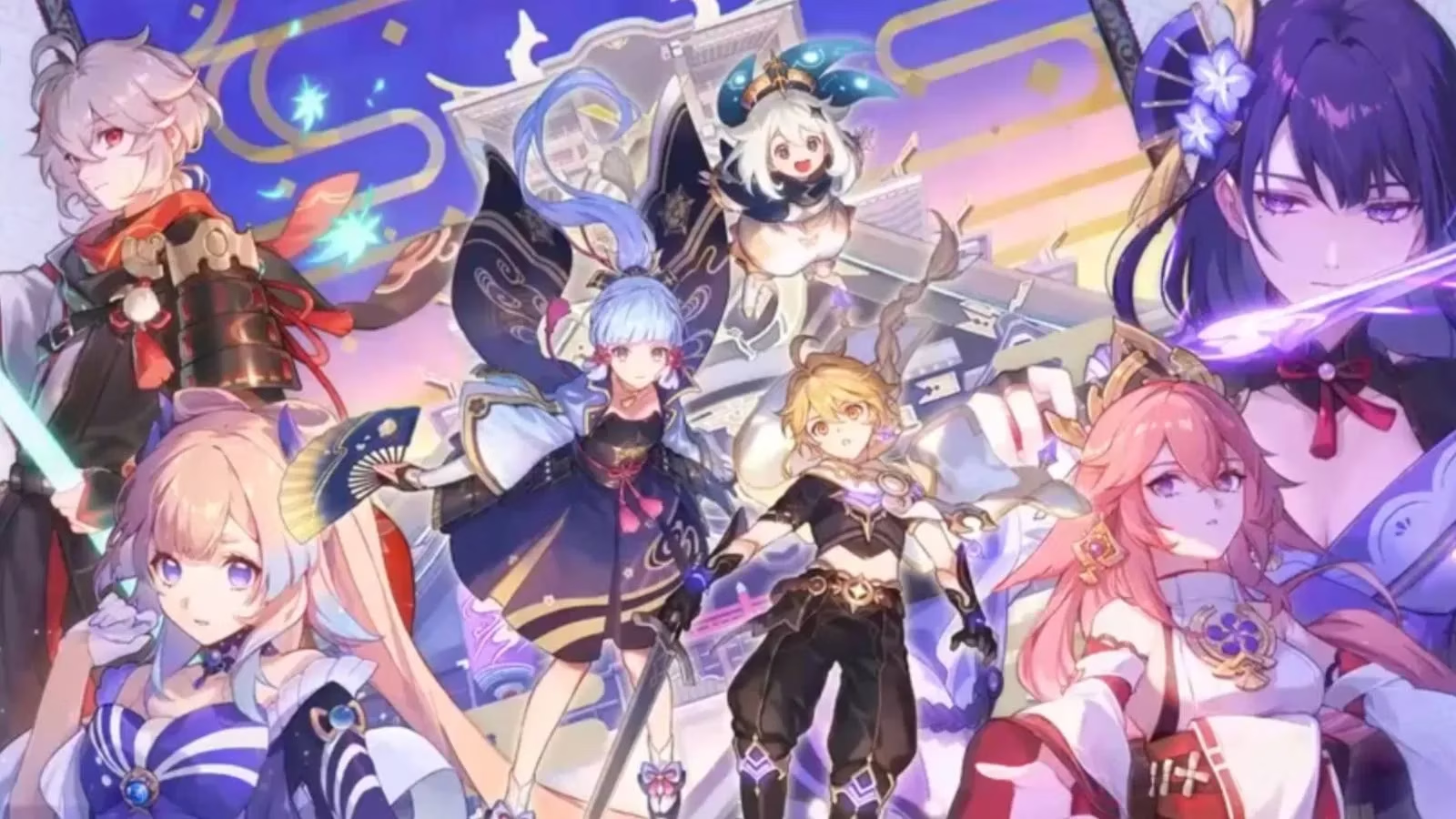
Back then, the numbers painted a staggering picture: China led the charge with 28.6% of global revenue, Japan followed at 23.7%, and the United States rounded out the top three at 21%. Honor of Kings and PUBG Mobile still sat smugly above us, but those rankings ignored the console and PC revenue that hoYoverse – still called miHoYo at the time – was quietly raking in. I streamed my grinding sessions, pulling for characters like Kujou Sara while marveling at how a game could feel so vast yet so intimate. Little did I know that the storm clouds were already gathering.
The first anniversary hit like a Cryo-infused nuke. Players, myself included, felt the reward structure was absurdly stingy – a few Intertwined Fates, some Mora, and a cosmetic pet that barely registered. The community erupted. Review bombing cascaded across every platform; not just Genshin’s own pages, but Honkai Impact 3rd and even the completely unrelated Fate/Grand Order got dragged through the mud. I watched friends spiral into a frenzy, some quitting outright, others organizing Google Classroom boycotts. The irony? The game that had broken spending records was now being torn apart by the very people who funded it, all because we craved a meaningful “thank you.”
miHoYo’s response arrived in a carefully worded statement, promising more gifts and acknowledging that “opinions and feedback from players and fans are really valuable to us.” I remember scoffing at the screen, convinced it was corporate lip service. But something shifted. Over the next few weeks, we got a 10-Intertwined-Fate package via in-game mail, a glider skin, a concert bundle, and a resonance stone that felt like a genuine olive branch. The review scores slowly climbed back, though the scars on the community remained. I stuck with the game, partly because I’d already sunk so much into it, and partly because the core loop of exploration and elemental combat was just too damn good.
Five years on, the landscape has transformed. Genshin Impact now sits comfortably as the highest-grossing mobile game of all time when you factor in all platforms – the 2021 $2 billion figure almost looks quaint. The anniversary events have matured into grand festivals; the 2025 “Chronicles of the Forgotten Stars” event gave players a free five-star character selector, a stark cry from the stingy beginnings. I was there, in the front row of the livestream, tears welling up as I picked my long-missing Aloy constellation. hoYoverse has expanded Teyvat beyond the seven nations, introduced underwater ruins, skyborne archipelagoes, and a card-based Paradox Realm that pulls players back every patch. The community, once fractured, now bustles with theorycrafters, teapot architects, and co-op veterans who still argue about the best team members for Kujou Sara – though that conversation feels ancient now with the Dendro-Cryo resonance meta dominating.
What strikes me most as a professional gamer is how Genshin rewired the industry. It proved that a single-player-driven, live-service RPG could generate billions without predatory PvP mechanics, simply by offering a world worth living in. Player spending now routinely spikes during Archon Quest finales, and the global revenue split has evened out – China still leads, but regions like Southeast Asia and Brazil have erupted, each accounting for double-digit percentages. The mobile version still carries the bulk of revenue, but the PS5 and cloud versions for ultra-low-end devices have opened Teyvat to millions who could never install a 40GB game.
Looking back, the anniversary drama of ’21 was a turning point. It taught both the developer and the community that passion without respect turns sour. Today, when a new banner drops, chat floods with ritual pulls and good-luck emojis, not review-bomb threats. I still stream Genshin almost daily, and I’ve come to see it less as a game and more as a second home. From the winds of Mondstadt to the neon gardens of Murata, every step echoes with memories – both bitter and joyous. If someone from 2021 had told me I’d be writing this in 2026 with a smile, I would’ve thrown a Paimon plushie at them. But here I am, proof that even the fiercest storms pass, leaving behind a world that keeps growing.